Theme world
Make everyday life easier at home in Cambridge
Plan step-free access, safer bathrooms, better lighting and practical adaptations around the way your property is actually used.
In Cambridge and selected locations
- Locally aware adaptation planning
- Bathrooms
- access and stair support
Local in Cambridge
What makes Accessible & Comfortable Living in Cambridge unique
Across Cambridge homes we help you find the right specialists for Accessible & Comfortable Living. Cambridge is located in England. Districts such as Chesterton, Eddington, Mill Road, Newnham, Romsey show how much local requirements can vary.

City focus
Cambridge
Local conditions shape the right plan for Accessible & Comfortable Living.
Funding options
Check which adaptations fit your home.
The right funding logic depends on the building, measure, and timing. The funding page gives you a structured first overview.
Explore fundingAccessible home adaptations: comfort that still feels like home
Accessible living is not only about major disability adaptations. For many households it starts with ordinary daily friction: a bath that has become difficult to use, a front step that feels unsafe in wet weather, poor lighting on stairs, or a kitchen layout that no longer works for someone with reduced mobility. The best projects make the home safer without making it feel clinical.
That matters because the housing stock is so mixed. Terraced houses, maisonettes, period cottages, post-war semis and newer flats all create different constraints. A level-access shower in a Victorian terrace needs different planning from grab rails in a bungalow or a stairlift in a narrow hallway. Good advice starts with the property, the people using it and the routines that currently cause stress.
For anyone planning the work, the practical question is simple: which accessible home adaptations make the biggest difference first? The answer is usually a sequence rather than a single product. Bathrooms, entrances, stairs, lighting and flooring tend to create the most immediate safety gains.
What accessible living usually includes
Accessible home adaptations often combine small improvements and larger building work. A household may only need better lighting and handrails today, but may want to keep the option of a wet room or stair support open for later. Planning in stages avoids wasted spend and keeps the home liveable during the work.
Level-access showers, wet rooms, shower seats and safer bathroom layouts
Handrails, stair support, ramps, threshold changes and easier entrances
Non-slip flooring, better lighting and clearer routes through the home
Wider access points, easier switches, reachable storage and smart controls
Kitchen, bedroom and living-room changes that support independent routines
Bathrooms, stairs and entrances create the biggest safety gains
The bathroom is often the first room to assess. Slippery floors, narrow shower screens and high bath sides create risk even before someone needs formal care. A carefully designed accessible bathroom can look modern and calm while adding level access, stable fittings, easier cleaning and better lighting.
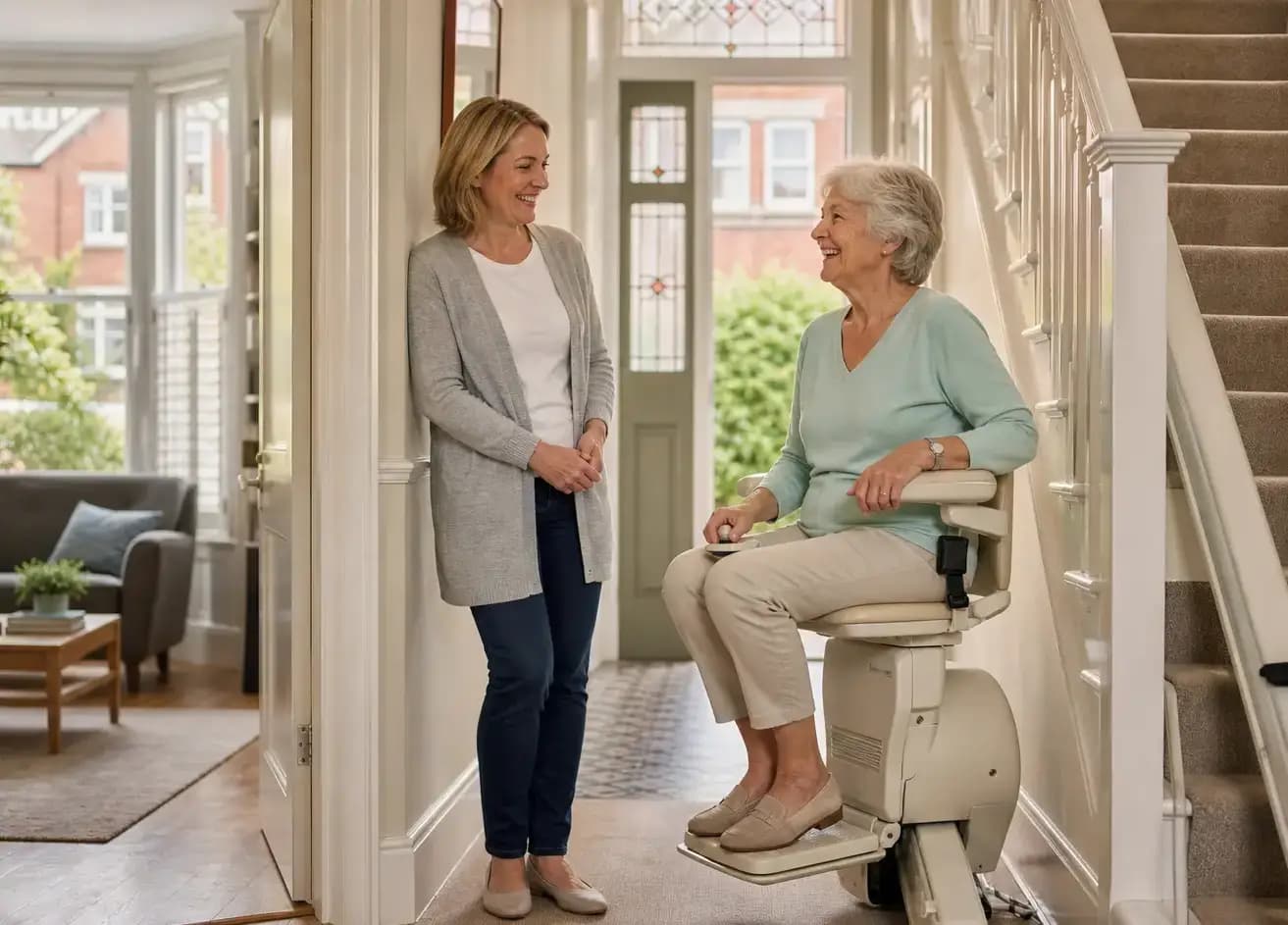
Stairs and entrances are the next priority. Many homes have front steps, split levels, tight landings or older staircases. A second handrail, brighter lighting, improved tread surfaces or a properly fitted ramp can make a daily route much easier. If a stairlift is being considered, measurements, power supply, landing space and future maintenance should be checked before committing.
Owned homes, rented homes and managed properties
The right process depends on who owns or manages the property. Owner-occupiers can usually plan around long-term comfort and future-proofing. Renters, leaseholders and families supporting an older relative may need permission from a landlord, freeholder, housing association or managing agent before work begins.
Funding routes and council support can also depend on personal circumstances, eligibility and local authority process. Users should check options before appointing a contractor, especially if the project may need assessment, permission or staged approval.
Which trades are usually involved?
Accessible living projects rarely sit with one trade only. A bathroom adaptation may need plumbing, tiling, flooring, electrical work, ventilation and decoration. Entrance changes may involve builders, joiners, metalworkers or specialist installers. The value of a good local business is not just fitting products; it is spotting what will work in the existing home.
Bathroom and plumbing specialists for wet rooms, toilets, basins and showers
Electricians for lighting, sockets, pull cords, sensors and simple smart controls
Flooring and tiling specialists for non-slip surfaces and clean thresholds
Joiners, builders and installers for doors, ramps, handrails and stair support
Surveyors or specialist advisers where layout, permissions or risk are unclear
A practical order for planning
Start with the routines that feel unsafe or tiring. Is the issue bathing, stairs, night-time movement, entrance access, cooking, or getting around the home? Then separate urgent safety work from longer-term comfort upgrades. This makes quotes easier to compare and helps families avoid panic decisions after a fall or hospital discharge.
Good quotes should explain the scope, materials, disruption, access needs, waste removal and aftercare. For bathroom projects, ask how waterproofing, ventilation and floor falls will be handled. For ramps, rails and stair support, ask how the installation will be fixed and maintained.
Why beeBAAHM helps
beeBAAHM helps homeowners and families turn an unclear adaptation need into a practical project brief. Instead of starting with a product, the check starts with the home and the everyday problem. That makes it easier to speak with local specialists, compare quotes and choose work that improves safety, comfort and independence in the right order.
From idea to project. No detours.
Tell us briefly what you need. beeBAAHM finds quality local specialists for free.
FAQ
Questions about accessible home adaptations
Planning notes for accessible bathrooms, step-free access, stairs and safer everyday movement in homes.